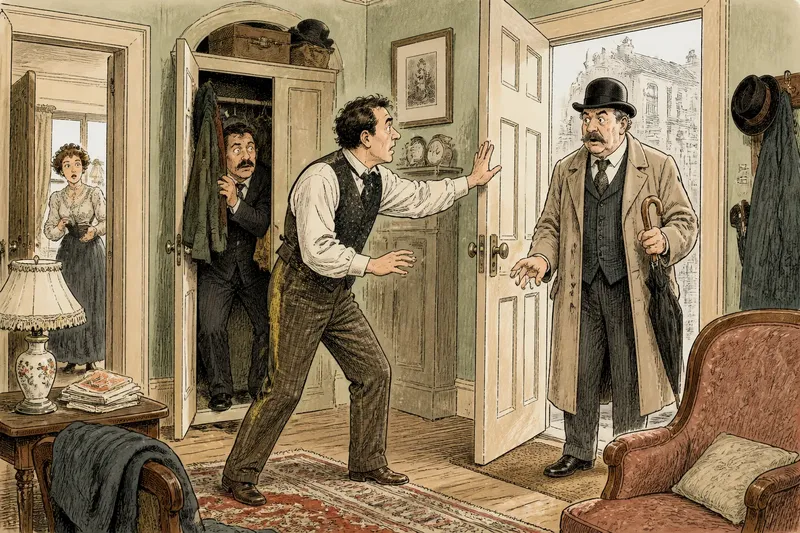
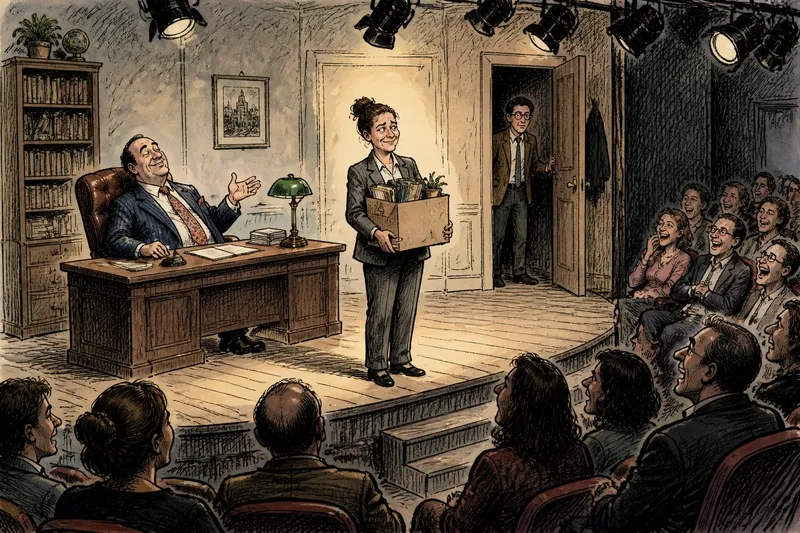
A Deadpan Line or a Knowing Pause?
Deadpan line or knowing pause: learn how delivery directs comic attention, and use a week of focused listening to shape timing without flattening a joke.

A deadpan line or a knowing pause sends the audience’s attention to a different place, even when the words stay the same. Understatement lets a performer present an absurdity as ordinary; a pause leaves a small space in which the audience can anticipate, notice or catch up. Neither works by itself. The voice, face, posture and pace around it tell the room how to listen.
For writers and performers revisiting comic material, the useful question is not which device is funnier. It is what you want the audience to do at that moment. A dry delivery may make listeners inspect the sentence, while a held beat can make them watch the speaker, remember an earlier detail or sense that something is coming. A week of short, deliberate practice can help you hear the difference without turning timing into a mechanical trick.
Two kinds of attention
Understatement lowers the apparent temperature of a line. The performer might describe a ridiculous inconvenience in a calm, precise voice, as though reporting the weather. That mismatch invites the audience to supply the reaction the speaker withholds. The comic effect often gathers around the gap between the scale of the event and the modesty of the response.
A pause works differently. It withholds the next sound. Listeners may use the interval to interpret what they have heard, anticipate a continuation, or notice that the performer has not reacted. A pause can make a plain sentence seem loaded, but it can also give a complicated line room to register before the next thought arrives.
These choices can overlap, but they are not interchangeable. A line delivered dryly still gives the audience information through its wording and vocal character. Silence may carry little meaning if the performer’s attention wanders or the room cannot tell whether the gap is intentional. Think of the difference between a lamp with a dimmer and a light switched off: both alter what you notice, but in different ways.
Delivery supplies the missing context. A level voice can sound composed, weary, baffled or quietly defiant. A pause accompanied by a fixed gaze feels unlike one spent looking down at a page. The audience reads the whole event, not a punctuation mark isolated from the person producing it.
What does deadpan ask?
How does understatement shape a punchline?
Understatement asks the audience to recognise the imbalance between what happened and how casually it is described. The performer’s restraint can leave listeners room to complete the comic thought themselves.
Can a flat voice still feel expressive?
Yes. Small differences in emphasis, breath, consonants and pace can make a seemingly neutral line feel exact rather than empty. The aim is controlled delivery, not an absence of choices.
When does a pause feel intentional?
A pause feels intentional when the performer remains present and the interval has a clear relation to the thought. A watchful stillness can hold attention; an uncertain break may instead suggest that the performer has lost the line.
Should a pause be the same every time?
Not necessarily. The length and character of a pause can shift with the room, the sentence and the performer’s aim. Keep the underlying comic turn clear, then allow delivery to respond to actual audience attention.
A week of listening
Use the week as a sequence of observations, not a test with a score. Choose a short piece you can revisit: a monologue, a scene, a familiar routine or a paragraph of your own. Keep the material manageable enough that you can notice delivery rather than struggle to remember the text. A notebook is useful; a phone voice recorder can help you hear your own rhythm, provided you are comfortable recording yourself.
- Monday, listen without judging. Read or hear the piece once. Mark where the wording itself carries the comic turn, where the speaker’s attitude matters, and where a listener may need a moment to follow.
- Tuesday, mark the sentence. Underline the words that carry the main contrast or reveal. Circle any phrase that seems to over-explain the joke. Do not add pauses yet; first decide what the sentence actually asks the audience to understand.
- Wednesday, try understatement. Deliver the selected line plainly, with a consistent speaking pace and no extra facial signal that tells the audience when to laugh. Then repeat it with a deliberate but natural emphasis on one meaningful word. Notice how each choice changes the speaker’s apparent attitude.
- Thursday, try the pause. Place a brief silence before the important phrase, then try one after it. Keep your gaze and posture engaged during the gap. Ask a listener what they noticed, not simply whether the line was funny.
- Friday, compare the versions. Perform the line once with understated delivery and once with a pause, changing no wording. If you have a recording, listen for rushed endings, audible preparation and changes in vocal energy. Make notes about the effect rather than selecting a winner in advance.
- Saturday, put it back in context. Perform the line with the sentences around it. A pause that seems useful alone may interrupt the scene’s momentum; a dry line may need a nearby reaction to make its restraint legible. Keep the choice that serves the larger exchange.
- Sunday, make a small revision. Adjust one element: remove an explanatory phrase, shift an emphasis, or alter the silence. Keep the version that makes the intended relationship between speaker and event easiest to read, then leave it alone long enough to hear it afresh.
The practice works best when each day has one question. Trying to tune wording, gesture, volume, gaze and silence at once makes it hard to tell which change altered the effect. If a line stops sounding like the character who speaks it, return to the original delivery and change only the timing.
When does delivery change the choice?
Understatement depends on contrast, but contrast need not mean a completely expressionless face. A slight tightening of the mouth, a precise gesture or an unusually careful pronunciation can sharpen the impression that the speaker is treating nonsense as routine. Too much visible signalling, however, may tell the audience how to react before they have found the comic mismatch.
A pause depends on what the audience can follow during the silence. If the preceding sentence is dense, a beat may give listeners time to understand its turns. If the joke relies on surprise, a long anticipation pause may advertise the arrival and weaken the discovery. A glance towards another character can redirect the audience’s attention from the words to that person’s reaction.
Room and medium matter, too. In a small rehearsal room, a quiet change of expression may be easy to read. On a larger stage, a performer may need clearer physical focus; in audio, the voice and the silence carry nearly all the information. This does not mean one format requires exaggerated timing. It means the performer should consider what signals the audience can actually receive.
Imagine a fictional scene in which a caretaker discovers that a chair has been placed in a cupboard and says, “That seems sensible.” With deadpan delivery, the caretaker’s calm wording asks the audience to notice the mismatch between the situation and the approval. With a pause before “sensible”, the silence may invite them to picture the chair’s odd destination first. If the performer adds a pointed look at the cupboard, the pause becomes more accusatory; if the character stays absorbed in a clipboard, the same words may suggest weary routine. The choice changes with the behaviour surrounding it.
Keep the character in charge
Both devices can become mannerisms when applied indiscriminately. A performer who treats every line as dry can make distinct thoughts blur together. Someone who waits after every sentence can turn a lively exchange into a series of announced punchlines. Variation matters because the audience listens for a pattern; a break in that pattern can become meaningful.
Ask what the character knows and what they want the listener to notice. A speaker may use understatement to conceal irritation, preserve dignity or avoid acknowledging an absurd situation. A pause might show reluctance, invite another person to answer, or mark a sudden shift in attention. These are playable intentions, not instructions to “be funny”.
For a scene with more than one performer, listen to the other person’s timing before fixing your own. A pause may belong to the exchange rather than to an individual line: one actor’s delayed response can make the preceding remark land differently. Leave room for partners to breathe and react, without assuming that every gap needs to be filled or held for a laugh.
When preparing established material, keep the wording and the delivery question distinct. First understand the sentence’s meaning in its scene; then consider whether its comic force comes from restrained response, delayed information or a combination. The script’s punctuation can suggest rhythm, but it cannot dictate the exact physical and vocal life of the performance.
Choose the audience’s next thought
Before settling on either device, complete a sentence for yourself: “At this point, I want the audience to notice…” If the answer is the strange gap between event and response, understatement may serve the line. If the answer is a detail, a reaction or an expectation that needs space to form, a pause may help. If the answer is unclear, revising the line or its surrounding action may be more useful than adjusting timing.
That is the practical centre of the deadpan line or knowing pause: not a fixed recipe, but a decision about attention, carried by a particular performer in a particular moment. Use the week to find out what the audience can read in your voice, stillness and gaze, then make the choice that lets the character’s thought arrive cleanly. A laugh may follow, but clarity is the part you can shape.